Blog

Transporting India: The Growing Need for Reforms in the Trucking Sector

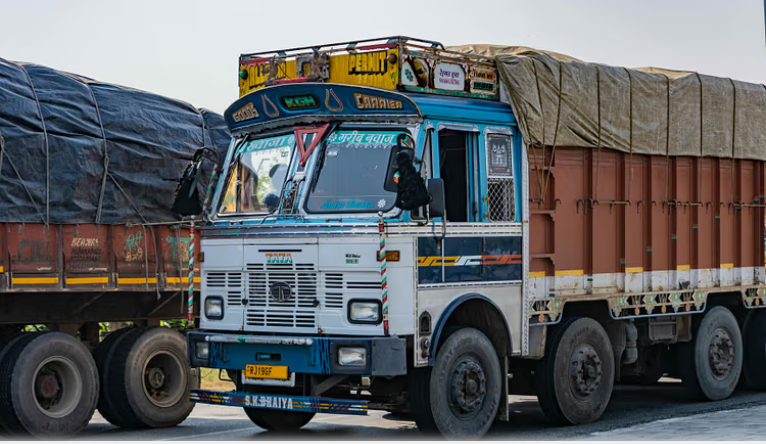
India’s trucking industry faces challenges such as highly unorganized operations, inefficient load matching, high broking costs, limited reach, lack of transparency.

India is experiencing historical growth — urbanisation, population increase, the rise of e-commerce, and increasing income levels have heightened the demand for goods and services. The road freight sector is expected to grow fourfold by 2050 to meet this rising demand. Currently the trucks transport more than 65% of India’s freight. The trucking industry provides employment to 2.2 crore people while adding 5% to India’s GDP.

However, the sector continues to face challenges such as highly unorganized operations, inefficient load matching, high broking costs, limited reach, lack of transparency, and an overall fragmented network that relies heavily on personal contacts and lacks an easily accessible knowledge base. With the sector’s accelerated expansion, increased demand, and the country’s overall economic ambitions, it is critical that it manages these obstacles and rapidly evolves to become the actual backbone of a USD five trillion economy.

Truck Drivers: The Unsung Heroes Who Need Support
Truck driving used to be a respected occupation until public perception shifted. In the 1980s, each truck had 1.3 drivers, but today, this ratio has dropped to 0.55, leaving 40% of trucks without drivers. It may be because a trucker’s profession is very demanding and involves obvious as well as implicit issues and challenges like irregular shifts, long trips without adequate rest, hostile working conditions,
unaddressed health issues, etc.

However, several programs like Project Abhay for wellness, road safety and sustainable Livelihoods for truck drivers have started to improve trucker conditions by providing health screenings and vision check-ups and mental health support services. These initiatives have reached thousands of drivers who previously neglected their medical needs. Social security schemes like Ayushman Bharat and e- Shram enable many people to obtain health and accident coverage benefits for both them and their family members.

More of these initiatives are needed if we want to attract younger generations to the profession. Better working conditions with social security and wellness support with financial literacy can make their work easier and more rewarding. A trucker who feels valued will drive with more confidence and safety, benefiting everyone on the road.

Safer Highways, Smarter Logistics
Every trucking journey remains an unpredictable experience for drivers. Though the conditions of highways have increased multifold but still at many places lack of roadway lighting combined with unmarked lanes and the shortage of designated resting areas transforms highways into risky environments. The heavy traffic in freight corridors causes delays that force drivers to speed up longer routes which raises their chances of accidents. To resolve these issues, investments in high-visibility lane markers combined with well-maintained highways and designated truck rest facilities will create significant improvements in road safety.

Technology is another game-changer. Most truck drivers currently depend on oral recommendations for their routes, yet GPS training enables them to select optimal routes that combine speed and safety. Digital freight platforms enhance load matching, so they reduce the number of trips without cargo and increase trucker profits. Further inclusion of technology will drive both operational efficiency and sustainability within trucking industry.

A Shared Responsibility
The trucking industry functions as both a vital connection between companies and a profitable business. All stakeholders, including the government, along with logistics businesses and fleet owners, and industry associations, are responsible for ensuring the success of the trucking sector.

While focus on operational and administrative efficiency is essential, it should be complemented with increased attention to the quality of life experienced by the truckers. Standardization of the operational and administrative systems could help in improving the driving performance of drivers along with their health and well-being.

Thus, there is an urgent need to secure sustained commitment and harmonized strategic support to the health and well-being of the truckers across stakeholder constituencies. Better driver incentive schemes coupled with updated policies and enhanced pay structures will transform how people view trucking professionals. Companies making investments to enhance driver well-being combined with safety instruction and technological implementation will develop new industry benchmarks. The path to change extends over a long period yet remains essential to pursue. The success of the trucking sector directly reflects the operational efficiency of the entire nation.

Health and wellbeing of truck drivers

The transport sector forms the backbone of India’s economy. Today, the logistics sector represents five percent of India’s Gross Domestic Product (GDP) and employs 2.2 crore people.  Carrying  about 60-65% of the freight traffic, truck drivers playing a pivotal role in ensuring the seamless movement of goods across the  country. India’s trucking industry with over 3.5 million truck drivers is facing the problem of driver shortage. The Truck to driver ratio has come down from 1.3 in 1980s to 0.55 in 2024 has resulted 40% trucks to stand idle.  Truck driving profession has become un aspirational due to numerous challenges truck drivers face like a tough way of life, Irregular meal timing, lack of access to nutritious food, long working hours, lack of sleep, limited access to health care opportunities, family and other social institutions, and low respect.  Safety on roads is a another significant concern and accidents are common involving trucks on highways.  Despite the demanding nature of their profession about 85% of these drivers work in the unorganized sector, leaving them without access to essential benefits like health insurance, pension schemes, and accident coverage which makes the profession repelling. 

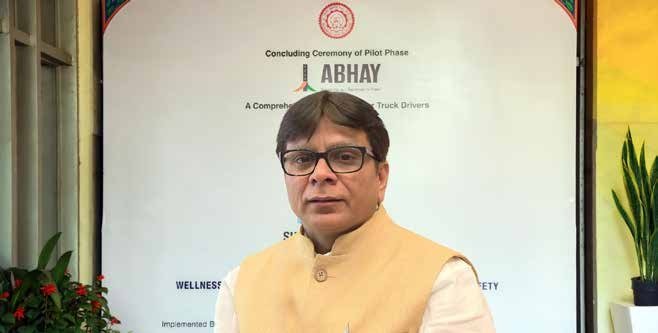
Health and wellbeing of truck drivers and their family is a major concern area and often remains overlooked.  Data from the Ministry of Labour and Employment (2020) shows that only 15% of informal sector workers in India have access to any form of social security. Truck drivers often have limited awareness of their health conditions, with hypertension, diabetes, dehydration, and muscle pain being common concerns and then Limited access to medical facilities due to continuous stays on highways. IIT Delhi and Foresight foundation with the support of Ministry of Road Transport and Highways, thoughtfully designed and implemented an integrated framework Project Abhay that seamlessly combines health, vision, social security, and behavioural interventions to provide a holistic solution tailored to the unique needs of truck drivers. Project Abhay follows an holistic approach by integrating comprehensive health screenings including physical health, mental health, and vision check-ups with on-spot dispensing of spectacles, social security enrolments, awareness modules, and soft skilling workshops.  

The project operates through a modular health camp-based approach, ensuring systematic delivery of services to each participant. The camps operates at  high-potential locations with consistent inflow of truck drivers such as toll plazas, transport nagars, RTO fitness centers, port terminals, and dhabas.   


  1. So far, Project Abhay have reached over 50,000 truck drivers across six states—Uttar Pradesh, Rajasthan, Madhya Pradesh, Maharashtra, Karnataka, and Tamil Nadu. Project Abhay demonstrated significant outcomes. Evaluation of mental and physical health at Project Abhay camp sites helped truck drivers knowing their health condition which majority of them were not aware without visiting doctor specially. About 55.1% of truck drivers were found to have compromised vision, with 53.3% requiring distance vision correction and 46.7% needing near-vision correction. The on-site dispensing of spectacles ensured that 93.7% of drivers with refractive errors received immediate corrections.  Health screening finds 44.3% of drivers exhibited borderline or above Body Mass Index (BMI), 57.4% had elevated blood pressure levels, and 18.4% showed borderline or high blood sugar levels. Drivers were provided with counselling on lifestyle changes including dietary changes and stress management, yoga training, with urgent cases referred to for further medical investigation. About 33.9% of drivers reported moderate stress, while 2.9% were found to have high stress levels, emphasizing the need for mental health support. Dedicated mental health counselling desks provided guidance and introduced drivers to resources like Tele-MANAS for ongoing support. Additionally, yoga sessions helped truck drivers immensely. Soft skill training focusing on critical aspects such as the proper way of loading trucks, the appropriate use of dippers and high beams, effective and calm communication with law enforcement officials, essential measures to take in case of an accident, and the importance of FASTag has enhanced the efficiency of truck drivers and also contributed to a more safe and cooperative ecosystem and creating a holistic and meaningful impact on truck drivers and their families. Games based learning and tools like the Saarthi Sathi Handbook and driver cabin posters are playing significant roles in ensuring high impact and continuous learning. The handbook has a physical wellness section includes awareness material on health and hygiene, step-by-step exercise routines tailored for alleviating discomfort during long driving.  During the follow up sessions many drivers found handbook and posters very helpful and motivating. 
  1. Integrating truck drivers into social security schemes is a step toward achieving inclusive social protection in India beyond improving truck driver’s quality of life. Through these efforts, Project Abhay seeks to empower truck drivers, enabling them to lead healthier, more confident lives and fostering an inclusive and sustainable environment for one of the most essential yet underserved communities in the nation. Project Abhay facilitated the registration of 15,447 drivers on e-Shram, 8,444 drivers on Ayushman Bharat, and 3706 drivers on Abhay Suraksha Bima Yojana, extending health and life insurance to over 62,700 family members with cumulative coverage exceeding ₹502 crore.  

Project Abhay also reflects the synergy of collaboration among government bodies,  transport unions, logistics, and grassroots organizations, ensuring that every stakeholder contributes to creating impactful and sustainable change.  


The Silent Crisis: Why India Needs MoreTruck Drivers for Economic Growth

India’s logistics sector, often called the backbone of the nation’s economy, ensures the seamless transportation of goods across the country. However, there is a significant shortage of truck drivers, which poses a major challenge for supply chains and could slow down economic growth. Despite being a crucial job, truck driving is not seen as an aspirational career. Poor working conditions, low pay, inadequate healthcare, and limited social security benefits deter individuals from pursuing this profession. Without urgent intervention, this shortage could become a major bottleneck for India’s economic ambitions.

India’s logistics sector is facing operational challenges due to a shortage of truck drivers, which significantly impacts the industry’s efficiency. Several factors contribute to this issue. Trucking is a demanding and often unappealing job due to long working hours, hazardous road conditions, and a lack of basic amenities. Drivers frequently spend days or even weeks on the road without sufficient rest or access to proper food, sanitation, or medical care. Additionally, truck drivers’ incomes are often inconsistent, making it difficult for them to support their families. The absence of social security, insurance, and other benefits further discourages people from choosing this career path.

Is essential:

  1. Better Working Conditions – Truck drivers need improved highway facilities, such as clean rest stops and medical centers. Initiatives like Abhay, a collaborative effort by IIT Delhi, Foresight Foundation,and the Ministry of Road Transport and Highways (MoRTH), show promise. Expanding such projects nationwide could make a significant impact
  2. Health and Well-being Focus – Drivers should have access to regular health check-ups, mental health support, and eye care. Establishing comprehensive support systems will help drivers feel valued and motivated.
  3. Upgrading the Profession – Modernizing truck designs to enhance safety, comfort, and convenience is essential. Additionally, training programs focusing on road safety, regulatory compliance, and the use of emerging technologies will improve drivers’ skills and elevate the status of the profession.
  4. Air Wages and Benefits – Competitive pay structures and consistent wages can make trucking a more attractive career option. Introducing social security benefits, including insurance, pensions, and accident coverage, will help draw new talent into the industry.
  5. Changing Perceptions – Public awareness campaigns that highlight the critical role of truck drivers in India’s This issue is compounded by the negative perception of truck driving as a profession. Unlike careers in emerging technologies, which attract younger generations, truck driving is often seen as a last resort rather than a viable career option. The social stigma associated with the profession, combined with the harsh working conditions,
    continues to shrink the pool of available drivers. This ongoing decline poses a serious challenge to India’s logistics sector, increasing the burden on supply chains.

The shortage of truck drivers has far-reaching consequences for India’s economy. Supply chain disruptions lead to delays in transporting essential goods, increasing logistics costs and negatively impacting overall business performance. These inefficiencies ultimately affect consumers, contributing to inflation by raising the prices of goods and services. Furthermore, unpredictable delays create significant challenges for key industries such as agriculture, manufacturing, and e-commerce, all of which rely heavily on timely deliveries

To address this critical shortage, a multi-faceted approach economy can help reshape societal attitudes. By portraying trucking as a respected and essential profession, younger generations may be more
inclined to consider it a viable career

The shortage of truck drivers in India is not just a logistical issue—it is an economic crisis that demands urgent action. Like other essential industries, a thriving logistics sector requires a skilled and motivated workforce. By addressing industry challenges through better wages, improved working conditions, and strategic initiatives, truck driving can become a more desirable profession. Strengthening this workforce is crucial for maintaining the smooth operation of India’s supply chains and achieving the nation’s economic objectives

Women Leadership in Local Bodies

Constitutional Provision of Women Reservation:

The 73rd Constitutional Amendment Act provides for the 33% reservation of women in

Panchayati Raj Institutions. It states that-

(1) Seats shall be reserved for-

(a) the Scheduled Castes; and (b) the Scheduled Tribes, in every Panchayat and the number of seats of reserved shall bear, as nearly as may be, the same proportion to the total number of seat to be filled by direct election in that Panchayat as the population of the Scheduled Castes in that Panchayat area or of the Scheduled Tribes in that Panchayat area bears to the total population of that area and such seats may be allotted by rotation to different constituencies in a Panchayat.

(2) Not less than one-third of the total number of seats reserved under clause (1) shall be reserved for women belonging to the Scheduled Castes or the Scheduled Tribes, as the case may be.

(3) Not less than one-third (including the number of seats reserved for women belonging to the Scheduled Castes and the Scheduled Tribes) of the total number of seats to be filled by direct election in every Panchayat shall be reserved for women and such seats may be allotted by rotation to different constituencies in a Panchayat.

(4) The offices of the Chairpersons in the Panchayats at the village or any other level shall be reserved for the Scheduled Castes, the Scheduled Tribes and women in such manner as the Legislature of a State may, by law, provide: Provided that the number of offices of Chairpersons reserved for the Scheduled Castes and the Scheduled Tribes in the Panchayats at each level in any State shall bear, as nearly as may be, the same proportion to the total number of such offices in the Panchayats at each level as the population of the Scheduled Castes in the State or of the Scheduled Tribes in the State bears to the total population of the State: Provided further that not less than one-third of the total number offices of Chairpersons in the Panchayats at each level shall be reserved for women: Provided also that the number of offices reserved under this clause shall be allotted by rotation to different Panchayats at each level. Having passed this amendment, after several rounds of elections more than a million women have entered in the domain of public life. The political empowerment of women at Panchayat level has achieved success at all the three tiers of Panchayati Raj Institutions, overcoming all the barriers of tradition, culture, caste and the class. After having completed the third round of election, some of the states have amended their Panchayats’ Act and provided more than one–third reservation for women and many states now provide 50 per cent reservation for women.

Impact of Participation of Women and Community Development (AC Nielsen ORG-MARG-Study with MOPR)

    1. The positive impact of entering politics and working as PRIs functionary, a sizeable proportion of women representatives receive enhancement in their self-esteem (79%), confidence (81%) and decision-making ability (74%);


    1. The elected women representatives perceived an increase to voice in decisions related to economic matter and other issues in their family (66-71%);


    1. Beyond the household domain, and in the professional environment, an increase in attention from local government (64%), representatives of the Block Panchayat (60%) and recognition from other Panchayat Members (65%) is reported by higher proportion of female Pradhans. No gender discrimination in the panchayat is reported by 60 per cent of the elected women representatives, acceptability in panchayat meetings and enabling them to raise issues freely, was mentioned by 94 percent,


  1. The supportive professional environment evidently motivates elected women representatives to perform better, as 60-64 per cent reported as increase in their interaction with line departments and parallel bodies. The participation of common women citizens in various activities such as attending Gram Sabha meeting etc. has reportedly increased (68-78%)

Dynamics of Rural Development

Dynamics of Development in Rural & Tribal Bharat

India is truly a country represented holistically by the villages in Rural and Tribal India. Due to many reasons in independent India villages did not get the kind of priority in developmental planning, the way they should have been aligned with the vision of Mahatma Gandhi.

Though Rural Development has been in the forefront of every Government in India since independence, but we are still witnessing a huge deficit on several key indicators of development in rural / tribal areas. There are several indicators which clearly indicate the poor treatment with tribal & rural Bharat.

India’s demographic dividends is the most talked about idea in recent times but more than 60% is not getting level playing field to explore their potential. They are the people living in the villages and denied access to facilities available in Urban India. On the other side, when it comes to earning livelihood and progress, they must complete with urban population who are privileged to have facilities far better than village community.

In recent past, it seems, there is big policy shift and some of the schemes by the govt are aimed at addressing some critical issues ranging from financial inclusion, access to free skill development trainings, livelihood opportunities and financial support through flagship scheme like MUDRA. There is still a long way to go and some of the major challenges that remain are:

Key Challenges:

  • The Physical connectivity which is also being talked about in the concept of PURA (Providing Urban Amenities in Rural Area)
  • Availability of quality education at par with urban India
  • Availability of clean drinking water and electricity
  • Availability of high-Speed internet connectivity
  • Long term vision for Agri sector
  • Rural based small industries which are sustainable
  • Primary Health care facilities
  • Quality of life in a village
  • Developmental clusters at district and block level for local employment opportunities for youth

If the above-mentioned challenges are addressed, India is all set to capitalise the demographic dividends, otherwise India is setting foot on a volcano that is her population. India needs to explore the potentials of large percentage of population to turn the large population in her favour.